Your whole life, printed in weeks
A personalized life calendar, built to scale without a human in the loop.
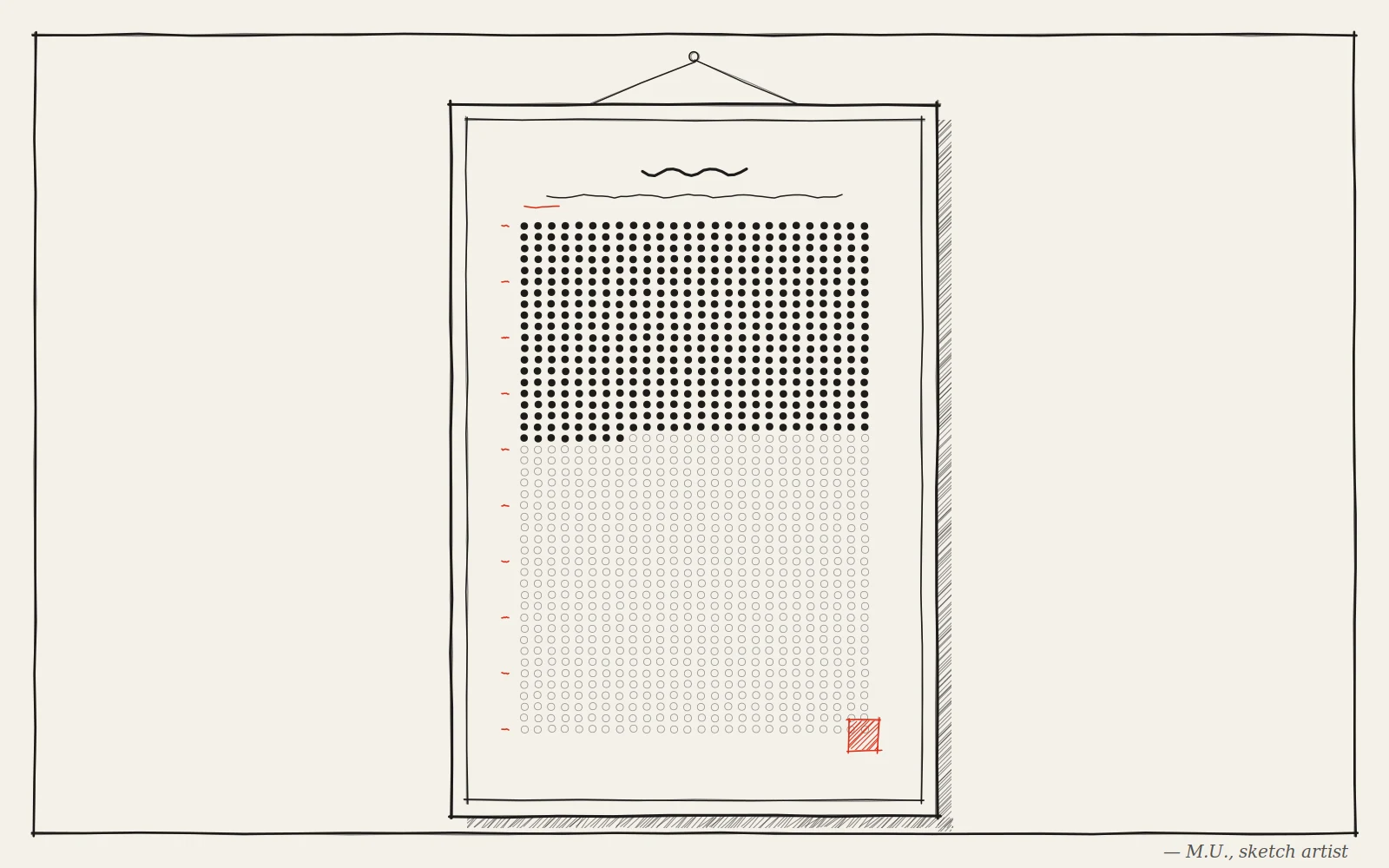
The life calendar, an 80-year × 52-week grid of a human life, existed online only as a generic, mass-produced print. OneMore set out to make the premium version: personalized, print-quality, and made to live on a wall.
I owned design and engineering end to end: the storefront experience, a print-first design spec, a custom rendering engine, and an automated pipeline from order to print.
The outcome
Launched in December 2025, with every order fulfilled automatically.
- 50+ orders fulfilled
- 0 manual interventions, from form submission to print queue
- 5 versions across 3 sizes, all from one design spec
Growth came organically through LinkedIn and Instagram, with no ad spend.
The problem
The market had novelty. It didn’t have craft.
Existing life calendars were identical prints for everyone, with no personalization and production quality that read as a novelty rather than something to keep. The product had to be personal, premium, and quiet enough to live with every day.
The key decision
An order-to-print pipeline with no human in the loop. A personalized print product only scales if nothing between order and fulfillment needs a person. I built the chain end to end: Squarespace takes the order, Zapier passes the inputs to a custom renderer, the renderer produces a 300 DPI print-ready file, and Prodigi prints and ships it. Before launch, I stress-tested it with fake orders full of special characters, odd date formats, and partial submissions, and added validation so real customers never hit a failure.
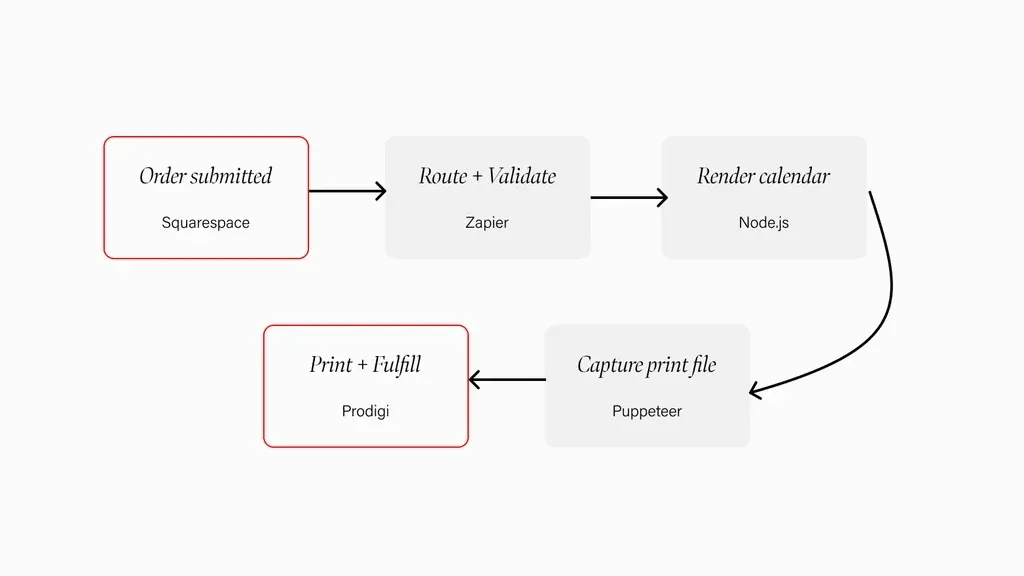
Why: an automated pipeline is only as good as the inputs and edge cases it was tested against. I’d rather break it myself than let a customer find out.
Want the full story? The full meal covers designing for print from the first artboard, the bleed spec that broke, making 4,160 weeks feel like art, and narrowing to 5 versions.