Founding designer takes a mental wellness platform from zero to live
Helping people understand what they need, and connecting them to a therapist when they're ready.
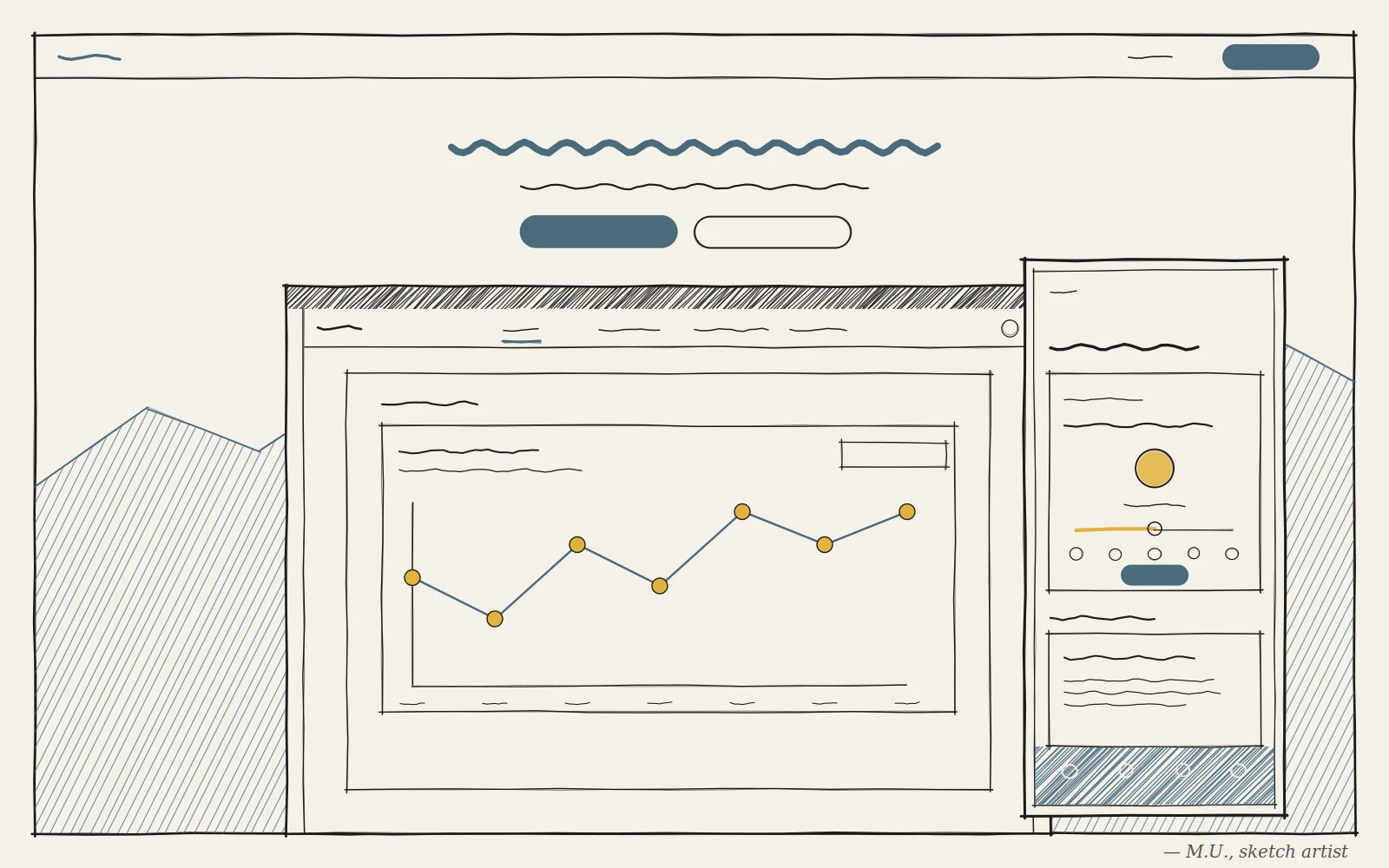
Most people struggling with stress, anxiety, sleep, or mood aren’t in crisis, and they aren’t sure they need therapy. Wellness apps like Headspace and Calm focus on meditation, not therapy, and therapist directories assume you already know you need one. HEAL is a free platform for that in-between: clinician-designed pathways that build understanding first, then connect people to a therapist when they’re ready.
As founding designer, I led design from zero to one across web and mobile. I built a 200+ component design system, ran 3 rounds of beta testing with small cohorts, and designed the AI matching and recommendation layer planned for V2.
The outcome
From zero to a live platform on web and mobile, with 100 new users in its first month.
- 100 new users in the first month after web launch
- 2 platforms, web and mobile, built from one design system
- 200+ components, verified against WCAG 2.1 AA
- 6 clinician-designed pathways live at launch
The problem
The in-between is where most people actually live.
Mental healthcare tends to meet people at two points: crisis, or when they’re already sure they need therapy. Most people live somewhere in between, not sure their struggle “counts,” and carrying enough stigma that one clinical-feeling screen is all it takes to lose them. The design challenge wasn’t usability. It was trust.
The key decision
Goals first, clinical questions later. Product and our clinician wanted the clinical assessment upfront, like an intake form before seeing a doctor. I pushed back: asking personal clinical questions before someone understands the app felt like a diagnosis. I proposed 3 simple goal questions instead (what needs attention: sleep, stress, or mood?), which route people straight to a pathway, with clinical assessments coming later, once they’re invested. The team agreed, it shipped on web and mobile, and beta testers moved through onboarding without friction.
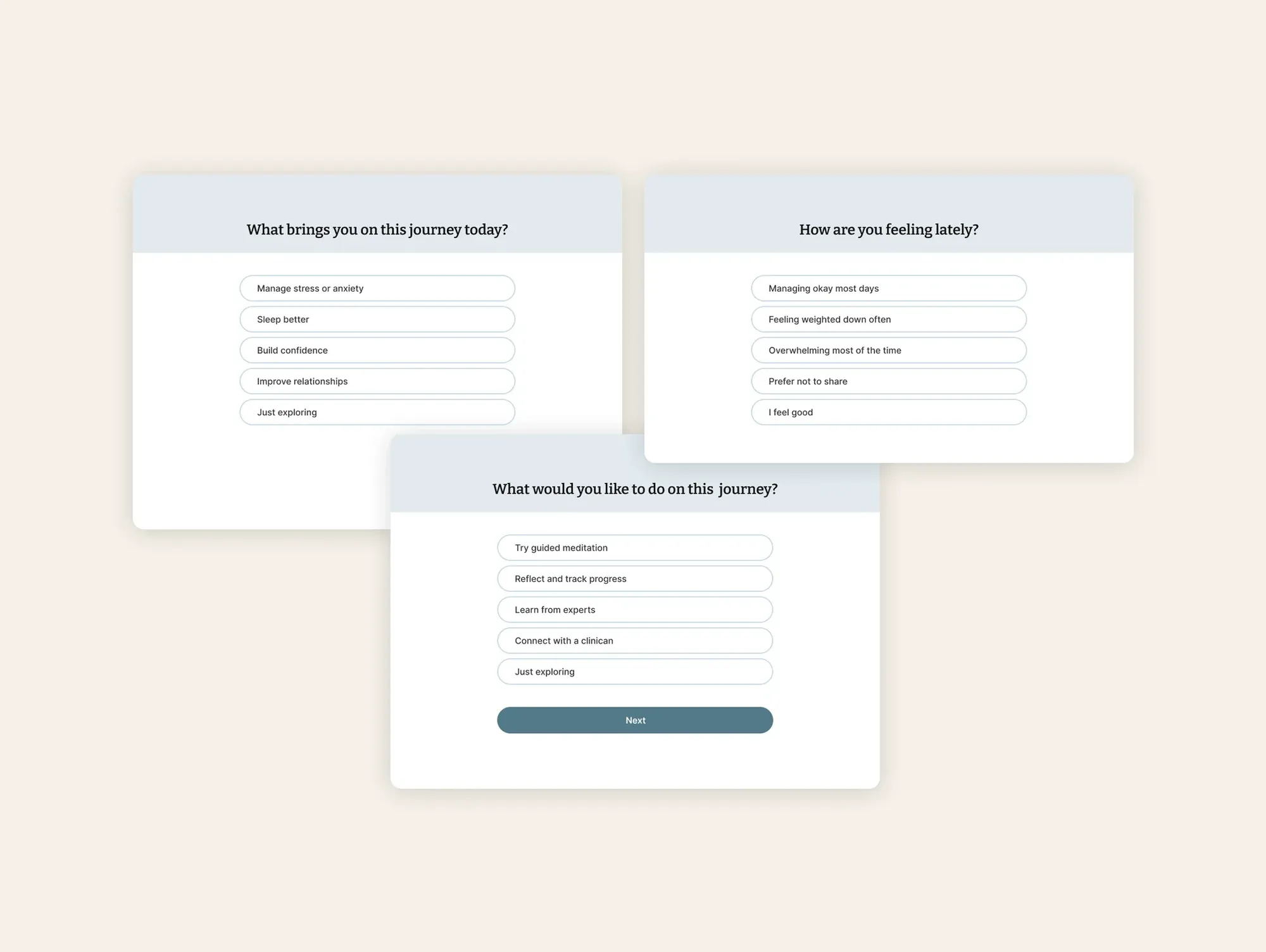
Why: leading with a clinical questionnaire feels like a diagnosis. Leading with goals feels like a conversation.
Want the full story? The full meal covers the research, the AI matching layer, the skip-vs-context debate, leading a second designer, and what I’d do differently.